
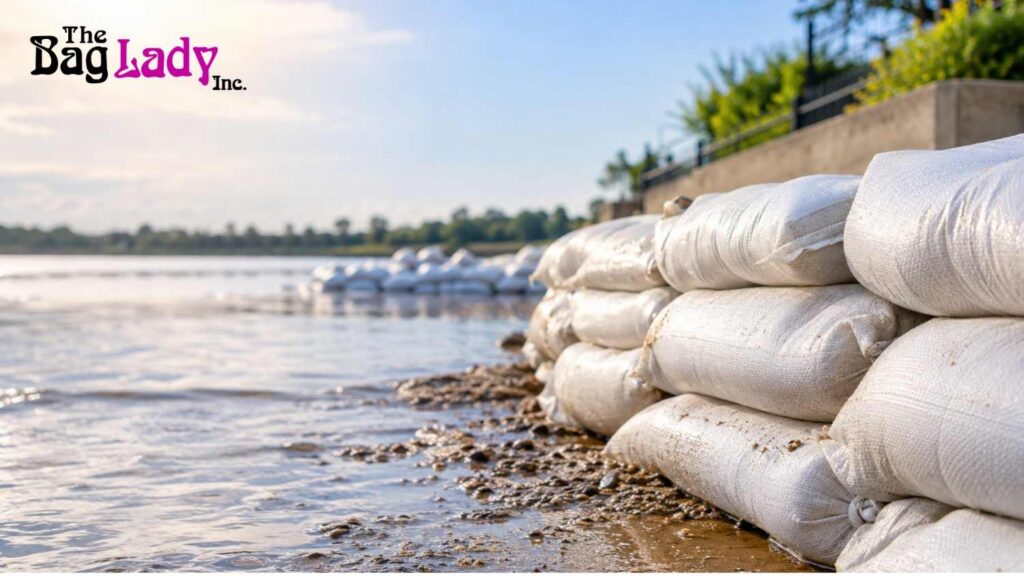
Sandbags do not have one fixed outdoor lifespan. How long they remain usable depends on the bag material, exposure to sunlight and weather, how long they stay in place, and whether they have been damaged or contaminated. For The Bag Lady’s sandbags, UV protection is rated at up to 2,000 hours. The company describes this as roughly three months of direct outdoor exposure.
That does not mean every sandbag needs to be thrown away after exactly three months. A bag stored indoors or protected from direct sunlight can last much longer, while one exposed to constant sun, rain, flooding, or heavy handling may need to be replaced sooner.
Knowing when to replace sandbags is important because a bag that looks usable from a distance may have weakened fabric, damaged seams, or other signs that can affect its performance.
What Determines How Long a Sandbag Lasts Outdoors?
The biggest factors are exposure and material. Sandbags used temporarily during a flood may have a very different service life from bags left outside for months on a construction or erosion-control project.
Sunlight is particularly important for polypropylene bags because ultraviolet radiation gradually breaks down the material. Moisture, repeated handling, abrasion, and contact with soil or other materials can also contribute to deterioration over time.
Sunlight and UV Exposure
Direct sunlight is one of the main concerns when sandbags are stored or left outdoors. UV radiation can weaken the material over time, making the bag more brittle and increasing the chance of tearing.
The Bag Lady treats its sandbags for UV resistance, which slows this process but does not stop it. This is why outdoor storage should not be treated the same as protected storage. If bags are being stockpiled for future emergencies, keeping them out of direct sunlight can help preserve the material.
Rain and Moisture
Water exposure does not automatically mean a sandbag has reached the end of its useful life. Polypropylene is resistant to rot and mildew compared with natural fibers, which is one reason it is commonly used for flood-control applications.
However, repeated exposure to moisture can still create problems depending on the bag material, how it is stored, and how long it remains wet. Burlap, for example, is a natural fiber and is less resistant to mold and rot than polypropylene.
Handling and Physical Wear
Sandbags can also deteriorate from being moved, dragged, stacked, or handled repeatedly.
A bag that has been exposed to rough surfaces or heavy equipment may develop abrasions or small tears even if it has not been outside for very long. Once the fabric has been weakened, the bag may not be suitable for another application where it needs to hold its shape and weight.
How Long Can Polypropylene Sandbags Last Outdoors?
Polypropylene is a common choice when bags need to hold up against moisture and decay. The Bag Lady uses woven polypropylene bags for flood control and other high-demand applications because of the material’s resistance to moisture and UV exposure.
However, the outdoor lifespan still depends heavily on UV exposure and the conditions surrounding the bags. As noted above, The Bag Lady rates UV protection at up to 2,000 hours.
That figure should be treated as an exposure guideline rather than a universal expiration date. A bag kept under cover degrades far more slowly than one sitting in direct sunlight every day.
Why UV Protection Matters
UV-resistant material gives polypropylene bags additional protection against sunlight, but it does not make them permanently resistant to outdoor exposure.
For projects that require bags to remain outside for extended periods, inspect them regularly rather than relying only on how long they have been deployed.
What Happens as Polypropylene Breaks Down?
As the material deteriorates, it can lose some of its strength and become more vulnerable to tearing. The fabric may begin to look weathered, brittle, or faded.
A bag does not have to fall apart completely before it needs replacing. If the material has visibly weakened, replacing it before it fails is a safer approach.
How Long Do Burlap Sandbags Last Outdoors?
Burlap sandbags are made from natural jute fibers and are biodegradable. They can be useful for applications where a natural material is preferred, but they are more prone to mold and decay than polypropylene.
Because burlap is a natural fiber, its condition can change more quickly when it is exposed to prolonged moisture and outdoor conditions. The expected service life therefore depends heavily on the environment and how long the bags are intended to remain in place.
When Burlap Makes Sense
Burlap works well for short-duration projects where a natural, biodegradable material is preferred and extended outdoor exposure is not expected.
Factor in project duration, moisture exposure, and how often the bags will be moved when deciding.
Why Burlap Requires Closer Inspection
Burlap can deteriorate through moisture, mold, and rot. Inspect the fabric directly rather than assuming an intact, filled shape means the bag is still serviceable.
If the material has become soft, weakened, heavily deteriorated, or damaged around the seams, replacement may be necessary.
What Are the Signs That a Sandbag Needs to Be Replaced?
There is no need to wait for a sandbag to completely fail before replacing it. Regular inspection can help identify problems while the bags are still in place.
Look for changes to the fabric, seams, ties, and overall condition of the bag.
Visible Tears or Holes
Small holes can become larger when a filled bag is moved or exposed to water pressure. Inspect the sides and bottom of the bag, especially if it has been dragged or placed on rough ground.
A tear that exposes the sand or is spreading is a clear reason to replace the bag.
Brittle or Weak Fabric
If the material feels unusually brittle or tears easily during handling, it may have degraded from prolonged exposure.
This can be particularly important for bags that have spent extended periods in direct sunlight.
Damaged Seams or Ties
The seams and closure points need to remain intact for the bag to hold its contents.
Check areas around the hem, stitching, and tie points for separation or significant wear. A damaged closure can allow the bag to open or lose material during handling.
Mold, Rot, or Severe Deterioration
Natural burlap is more susceptible to fungal degradation than polypropylene. If the fabric is visibly deteriorating, replacing the bag is preferable to continuing to rely on it.
Should You Replace Sandbags After a Flood?
Not automatically. The condition and exposure of the sandbag matter, but floodwater introduces another concern: contamination.
The Bag Lady advises that sandbags exposed to floodwater should be inspected carefully because floodwater may contain sewage, chemicals, or other hazardous materials. The company recommends following local disposal requirements for contaminated bags.
This is different from simply asking whether the bag material is still intact. A bag can appear physically sound and still be unsuitable for reuse because of what the floodwater contained.
Clean and Undamaged Bags
Unused sandbags that remain clean, dry, and undamaged can often be stored for future flood preparedness. The Bag Lady recommends keeping them dry and out of the sun.
Before putting them back into storage, inspect the fabric and closure points. Stockpiling bags that are already deteriorating wastes storage space and leaves you with unreliable inventory.
Flood-Exposed Bags
If a sandbag has been exposed to floodwater, do not assume it is safe to reuse simply because it still looks intact.
Floodwater can carry contaminants that are not visible. Disposal should follow applicable local guidance, particularly when floodwater may have carried pathogens, chemical runoff, or other contaminants.
How Should You Store Sandbags to Extend Their Useful Life?
Storage conditions can make a major difference, particularly for sandbags that are purchased ahead of a flood event and kept as part of an emergency supply. Protect the bags from unnecessary exposure until they are needed.
Keep Them Away From Direct Sunlight
UV exposure can gradually weaken the material, so sandbags should be stored in a covered or otherwise protected area.
A dry, shaded storage area is preferable to leaving unused bags exposed outdoors.
Keep Stored Bags Dry
Moisture can create additional problems during extended storage. Store bags in a location where they will not sit in standing water or remain exposed to repeated rain.
The storage area should also allow you to inspect the bags periodically.
Avoid Unnecessary Handling
Repeated movement can create abrasion and wear. If sandbags are being stored for emergency use, organize them so they can be accessed without repeatedly dragging or shifting them.
This is especially useful for organizations maintaining large inventories for flood response.
Does the Type of Sandbag Matter for Outdoor Use?
Yes. The material should match the conditions and expected duration of the application.
The Bag Lady supplies both polypropylene and burlap sandbags, with polypropylene offering stronger protection against moisture and organic deterioration, while burlap provides a biodegradable natural-fiber option.
The right choice depends on the purpose of the sandbags, how long they will remain outside, and the conditions they are expected to face. For a closer comparison, see What Type of Sandbag Works Best for Flood Control?
Polypropylene for More Demanding Outdoor Conditions
Polypropylene is widely used for flood control because of its resistance to moisture and rot. It can also be stored compactly while empty, making it practical for organizations that need to keep large quantities available for future use.
For longer projects, the material’s resistance to environmental conditions can make polypropylene a practical option.
Burlap for Shorter-Term Applications
Burlap can be useful when a natural, biodegradable material is preferred. Because it breaks down faster when damp, however, it may be better suited to applications where prolonged exposure is not expected.
The expected service conditions should always be considered before selecting the material.
How Often Should You Inspect Outdoor Sandbags?
There is no universal inspection schedule that applies to every project. The frequency should reflect how exposed the bags are and what role they are serving.
Sandbags sitting in direct sunlight and weather require more attention than bags stored indoors. Bags used as active flood-control barriers should also be checked for physical damage, movement, and deterioration during and after significant weather events.
Inspect Before Deployment
If sandbags have been stored for an extended period, inspect them before putting them into service.
Look for weakened fabric, holes, damaged seams, mold, or other visible problems. This is particularly important when the bags were previously stored outdoors.
Inspect During Extended Use
For long-duration projects, periodic inspections can identify deterioration before a bag fails.
Check areas that experience the most contact with the ground or other materials. Also look at the condition of bags at the bottom of a stack, where weight and friction can create additional wear.
Inspect After Severe Weather
Heavy rain, flooding, high winds, and repeated handling can change the condition of a sandbag barrier.
After severe weather, check whether bags have shifted, torn, lost their contents, or become contaminated. This can help determine which bags remain suitable and which need replacement.
How Can You Tell If Stored Sandbags Are Still Usable?
Age alone does not provide enough information to determine whether a sandbag is still usable. A bag that has been stored correctly may remain in good condition, while a newer bag that has spent months in direct sunlight may show significant deterioration.
Before deployment, inspect the material, seams, closures, and overall condition.
A simple inspection should answer three questions:
- Is the fabric still strong and intact?
- Are the seams and closures secure?
- Has the bag been exposed to contamination or conditions that make reuse inappropriate?
If the answer to any of these raises concern, replacing the bag is safer than finding out it cannot withstand deployment.
When Should You Replace Sandbags Instead of Reusing Them?
When a bag fails one or more of the inspection checks above, replacement is warranted. The harder question is timing, because the cost of a failed bag depends on when it fails.
For flood-control barriers, act before the next weather event, not during it. A weakened bag can lose sand, shift position, and open a gap in the barrier at the moment it is under the most pressure. Swapping out questionable bags while conditions are calm is far easier than patching a wall during a flood. For more on what causes barriers to give way, see Why Sandbags Fail During Floods and How to Prevent It.
Flood exposure changes the decision entirely. Once bags have sat in floodwater, treat replacement as the default and reuse as the exception, since contamination cannot be ruled out by looking at the fabric.
Do not wait for full failure. A bag that is showing early wear will not recover, and every additional week outdoors moves it closer to splitting. Replacing bags based on condition, rather than an arbitrary date or the point of collapse, keeps the barrier reliable when it is needed.
Need Sandbags for Flood Control, Construction, or Erosion Control?
The Bag Lady supplies polypropylene and burlap sandbags for flood control, erosion control, construction, and other applications. The company provides both empty and pre-filled sandbags and can handle large-volume requirements.
For organizations that need to prepare hundreds or thousands of bags, The Bag Lady also provides automated sandbag-filling equipment. Its current equipment offering includes the Megga Bagger, designed to speed up high-volume sandbag production.
Choosing the right bag is only part of preparing for a flood or large-scale project. Storage, deployment, inspection, and replacement planning all affect how reliably a sandbag supply performs when it is needed.
Frequently Asked Questions
How long do sandbags last outdoors?
There is no single lifespan for every sandbag. The Bag Lady states that its sandbags have UV protection for up to 2,000 hours, which it describes as roughly three months of outdoor exposure. Actual service life depends on conditions such as sunlight, moisture, material, and handling.
Can sandbags be left outside in the rain?
They can be used outdoors and for flood-control applications, but prolonged exposure can affect their condition. Polypropylene generally holds up better in wet conditions than burlap. Bags should still be inspected regularly and stored in protected conditions when they are not in use.
Can you reuse sandbags after a flood?
It depends on the condition and exposure. Sandbags that have been exposed to floodwater may carry sewage or chemical contamination and should not automatically be reused. Follow local disposal guidance for contaminated materials.
Do polypropylene sandbags last longer than burlap?
Generally, yes. Polypropylene offers the moisture and rot resistance described above, making it the more durable of the two. Burlap is a natural, biodegradable material that can be appropriate for shorter-term uses.
How should sandbags be stored?
Store unused sandbags in a covered, dry area shielded from UV exposure. This reduces unnecessary weather exposure and can help preserve the bags until they are needed.
How do you know when a sandbag needs to be replaced?
Inspect the fabric, seams, closures, and overall condition. Replace bags that have significant tears, brittle or weakened material, damaged seams, severe mold or rot, or contamination from floodwater.
Can sandbags be stored for future emergencies?
Yes. Clean, dry, and undamaged sandbags can be stored for future flood preparedness. Keeping them protected from direct sunlight and moisture helps maintain their condition between uses.
Are polypropylene sandbags waterproof?
No. Sandbags can help slow, redirect, and reduce the flow of floodwater, but they are not completely waterproof. Some water can seep through the material and around the barrier.
