
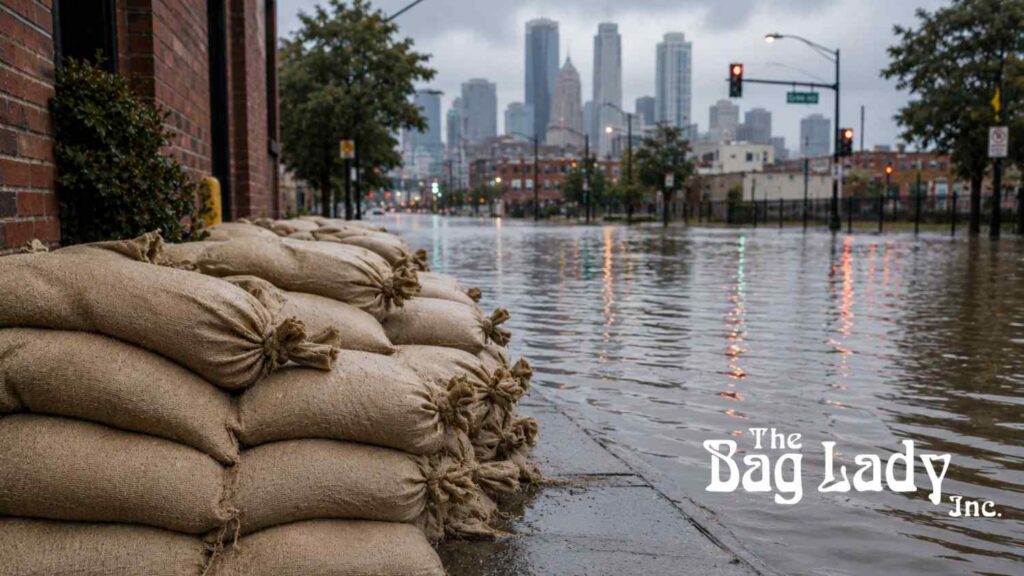
When heavy rain or rising water threatens a property, the right sandbags can help redirect water, protect entrances, and reduce the amount of water reaching vulnerable areas. But not every sandbag performs the same way. The best option for flood control depends on the bag material, expected water exposure, duration of use, and how quickly the barrier needs to be deployed.
Traditional burlap and polypropylene sandbags are two common choices, while other flood-control bags may be useful when fast setup or easier storage is a priority. Understanding how each type performs can help homeowners, businesses, contractors, and emergency response teams prepare before severe weather arrives.
What Makes a Sandbag Effective for Flood Control?
A flood-control sandbag needs to do more than hold sand. Once filled and properly placed, the bags should form a stable barrier that slows or redirects moving water.
Several factors affect how well a sandbag performs:
- Material Strength: The bag needs to withstand filling, handling, stacking, and exposure to wet conditions without tearing easily.
- Water Resistance: Some materials tolerate prolonged moisture better than others, which can matter during extended flooding.
- Stackability: Bags should conform to one another when stacked so there are fewer spaces for water to pass through.
- Weight When Filled: Properly filled bags need enough weight to remain stable as water pushes against the barrier.
- Durability: The expected length of use and exposure to sunlight, moisture, and rough surfaces can influence which material makes sense.
- Ease of Deployment: During an approaching storm, bags that are easy to fill, transport, and position can save valuable preparation time.
The right choice depends on where the bags will be placed and the conditions they are expected to handle.
Also Read: Why Flood Response Breaks Down Without Sandbag Filling
Are Polypropylene Sandbags Good for Flooding?
Polypropylene sandbags are one of the most practical choices for flood control. The woven synthetic material is lightweight before filling but strong enough to handle sand and withstand wet conditions.
They are particularly useful when large numbers of bags need to be stored or deployed. Because polypropylene does not absorb water like natural fibers, the bags can maintain their structure during prolonged exposure to moisture.
Polypropylene bags can be used to create barriers around:
- Doorways and garage entrances
- Buildings and commercial properties
- Roads and access points
- Drainage areas
- Construction sites
- Emergency response locations
For many temporary flood-control applications, their combination of durability, manageable weight, and moisture resistance makes polypropylene bags a strong option.
Are Burlap Sandbags Effective for Flood Control?
Burlap sandbags have been used for flood protection for many years. Their coarse natural fibers allow the bags to conform closely to one another when stacked, helping create a compact barrier.
One advantage of burlap is its flexibility. Once filled, the bags can settle into uneven surfaces and gaps, which can help when constructing a temporary barrier.
However, burlap is a natural material and can deteriorate when it remains wet for extended periods. This makes it better suited to short-term applications than situations where bags may need to remain outdoors for a long time.
For temporary flood preparation or emergency use, burlap can still provide an effective solution when the bags are properly filled, placed, and monitored.
Polypropylene vs. Burlap Sandbags: Which Is Better?
Both materials can be used for flood control, but the better option depends on the conditions.
- Polypropylene sandbags are generally better suited for longer exposure to moisture and situations requiring durable, lightweight bags that can be stored before use. They can be especially practical for businesses, municipalities, construction operations, and emergency preparedness programs that keep large quantities of empty bags available.
- Burlap sandbags can work well for temporary barriers where flexibility and close stacking are important. They may be appropriate when the bags only need to remain in place for a relatively short period.
Neither material will completely waterproof a property. Sandbag barriers are designed primarily to reduce, slow, or redirect water rather than create a completely watertight wall.
Learn more about why sandbags fail during floods and how to prevent it
What Should You Fill Flood-Control Sandbags With?
Sand is commonly used because it is dense, readily available, and settles inside the bag to create a stable barrier. Coarse sand can work particularly well because it allows the filled bag to remain flexible enough to conform to neighboring bags.
Avoid filling bags completely. Leaving some empty space allows the material inside to shift when the bag is placed, helping it flatten and fit against adjacent bags.
The bag should be filled enough to provide weight while remaining flexible enough to stack securely. Overfilled bags become harder to position and can leave larger gaps between layers. Automatic sandbag filling equipment can speed preparation when large quantities are needed
How Should Sandbags Be Placed to Help Stop Floodwater?
Even high-quality sandbags will perform poorly if they are placed incorrectly. The goal is to build a stable barrier with as few gaps as possible.
Start by clearing debris from the placement area so the first layer sits as flat as possible. Position each bag tightly against the next and place the tied or folded end underneath the bag. When building multiple layers, stagger the bags similarly to bricks in a wall rather than stacking seams directly on top of each other.
For wider or taller barriers, the base should be broad enough to support the weight above it. Each bag should also be pressed firmly into position to reduce open spaces where water can pass through.
Remember that sandbags are best used for relatively shallow or slow-moving floodwater. Severe flooding, fast currents, or structural threats may require professional flood-control systems and emergency assistance.
How Many Sandbags Do You Need for Flood Control?
The number of sandbags required depends on the length, height, and width of the barrier. Protecting a single doorway requires far fewer bags than surrounding a commercial building or creating a long flood barrier.
Before ordering, consider:
- The total area requiring protection
- Expected flood depth
- Number of doors and other low openings
- Barrier height and length
- Whether multiple layers will be required
- Extra bags for damaged units or unexpected problem areas
Planning quantities before storm conditions develop can help prevent shortages when demand for flood-control supplies increases.
When Should You Prepare Sandbags for Flooding?
The best time to prepare is before heavy rain begins. Filling and positioning large numbers of sandbags can take considerable time, especially when a property has several vulnerable areas.
Businesses, property managers, contractors, municipalities, and homeowners in flood-prone areas can keep empty bags in storage and arrange access to suitable fill material ahead of storm season. This reduces the amount of work required when a flood warning is issued.
Preparation also gives you time to inspect drainage areas, identify low points around the property, and decide where barriers will provide the most benefit.
For organizations or property owners without the time or resources to fill bags on-site, pre-filled sandbags can also be a practical option. Choosing between empty and pre-filled bags depends on available labor, storage space, and how quickly flood protection needs to be deployed. Large organizations preparing hundreds of sandbags may also benefit from equipment such as the Megga Bagger.
Which Sandbag Should You Choose?
For many flood-control situations, woven polypropylene sandbags are a practical choice because they are strong, lightweight before filling, and resistant to moisture. Burlap bags are useful for short-term applications where a flexible natural material is preferred.
The final choice should account for expected water exposure, deployment time, storage requirements, barrier size, and how long the bags will remain in place.
While sandbags remain one of the most widely used flood-control solutions, some applications may benefit from reusable flood barriers. Products such as the Flood Fighter provide an alternative for properties that require rapid deployment without the need to fill and stack large numbers of sandbags.
The Bag Lady supplies sandbags, bagging equipment, and flood-control solutions for homeowners, contractors, businesses, municipalities, and emergency response agencies throughout the Pacific Northwest. If you’re preparing for seasonal flooding or planning large-scale emergency response, our team can help you select the right products for your application. Contact The Bag Lady to discuss your flood-control needs and find the bag material, size, and quantity suited to your application.
Frequently Asked Questions
What is the best sandbag material for flooding?
Woven polypropylene is a practical choice for many flood-control applications because it is durable, lightweight before filling, and resistant to moisture. Burlap can also work well for temporary flood barriers, particularly when short-term use is expected.
Can sandbags completely stop floodwater?
No. Sandbags generally reduce, redirect, or slow water rather than create a completely waterproof barrier. Proper placement and stacking can improve their effectiveness.
Should flood-control sandbags be filled completely?
No. Sandbags should remain flexible enough to flatten and conform to adjacent bags. Overfilling makes them harder to stack and can create spaces in the barrier.
Can I reuse sandbags after a flood?
It depends on their condition and what the floodwater contained. Bags exposed to contaminated water may require special handling and disposal. Bags that remain clean and undamaged may sometimes be suitable for reuse after proper drying and inspection.
How should unused sandbags be stored?
Empty bags should be kept in a clean, dry location and protected from unnecessary exposure to sunlight, moisture, and other conditions that could damage the material.
Do I need to put plastic sheeting behind sandbags?
Plastic sheeting can sometimes be used with a sandbag barrier to help reduce water seepage. The appropriate setup depends on the property, expected water level, and type of barrier being built.
Can sandbags protect garage doors and entryways?
Yes. Sandbags are commonly positioned around garage doors, exterior doors, and other low openings to help reduce water entering a building. The barrier should extend beyond the opening and be stacked securely.
When should I order sandbags for flood season?
Order before severe weather is forecast whenever possible. Preparing early gives you time to determine quantities, obtain fill material, and position bags before heavy rain or rising water creates an immediate threat.
