
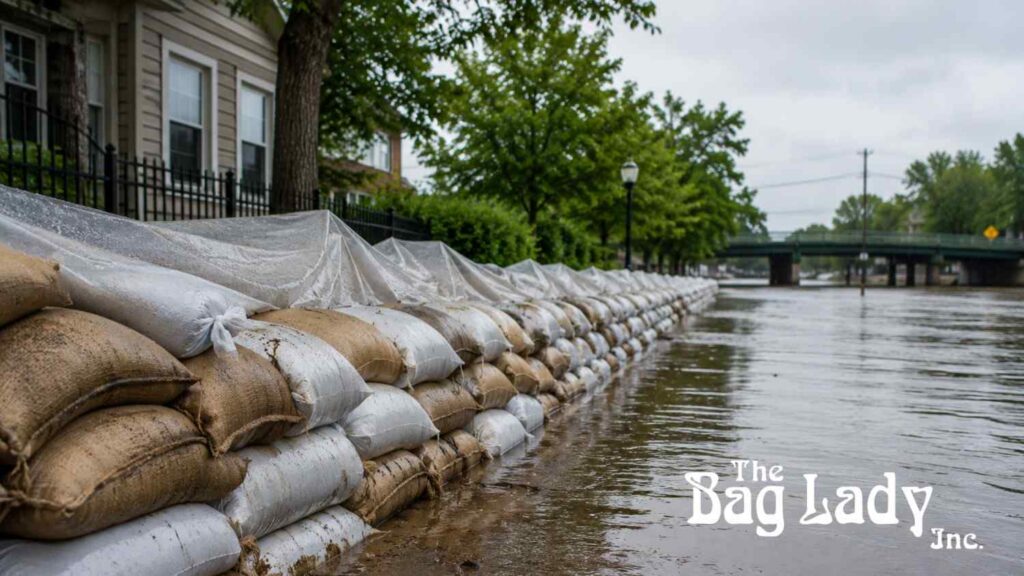
Sandbags can fail during floods if they are improperly filled, stacked incorrectly, placed too late, or used without a well-planned flood protection strategy. While sandbags remain one of the most effective temporary flood control solutions, their performance depends on proper preparation, quality materials, correct installation techniques, and ongoing maintenance throughout a flood event. Understanding the common causes of failure, and the best practices for preventing them can help homeowners, contractors, and emergency response teams build stronger flood barriers that provide more reliable protection during heavy rain and flooding.
Why Do Sandbags Fail During Floods?
Even a well-built sandbag barrier can fail if it is not planned or installed correctly. Most failures are preventable and result from mistakes made before or during deployment rather than the strength of the bags themselves.
Improperly Filled Sandbags
One of the most common problems is overfilled or underfilled sandbags. Bags that are packed too tightly cannot mold together, leaving gaps where water can pass through. Underfilled bags, on the other hand, may shift out of place under pressure.
Poor Placement
Simply stacking sandbags on top of one another does not create an effective flood barrier. Each row should overlap like bricks in a wall to reduce gaps between bags. Poor stacking techniques create weak points that allow water to seep through or undermine the barrier.
Weak Foundation
A sandbag wall is only as strong as the surface beneath it. Uneven ground, loose soil, or debris can create openings underneath the barrier. Water naturally follows the path of least resistance and can quickly flow beneath improperly prepared foundations.
Delayed Installation
Flood barriers are far more effective when installed before floodwaters arrive. Waiting until water is already rising makes it difficult to build stable walls and increases safety risks for workers and volunteers.
Damaged or Low-Quality Bags
Old, torn, or poor-quality bags may split under pressure or deteriorate after prolonged exposure to water and sunlight. Using durable bags designed for flood control helps improve the reliability of the barrier.
Using the Wrong Fill Material
Sandbags don’t always have to be filled with sand, but the fill material should provide enough weight and stability to create an effective barrier. Clean sand is typically the preferred choice because it conforms well when stacked and forms a tighter seal between bags. In some situations, soil may be used if sand isn’t readily available, but it should be free of large rocks, sticks, or other debris that can create gaps or damage the bags. Materials such as gravel or construction debris don’t compact properly, making the barrier less stable and increasing the risk of water seeping through.
Related Article: Emergency Flood Response 101: How Municipalities Should Prepare With Automated Baggers
How Can You Prevent Sandbag Failures?
Preventing failure begins long before floodwaters reach your property. Using the proper techniques, quality materials, and dependable sandbag filler equipment helps build stronger flood defenses while reducing manual labor and delays.
Use a Sandbag Filler for Consistent Filling
A sandbag filler helps ensure every bag is filled to the proper level for effective stacking. Consistent bag weights improve stability while allowing workers to fill hundreds or even thousands of bags more efficiently than filling by hand.
Prepare the Ground Before Stacking
Clear rocks, branches, and loose debris before placing sandbags. A smooth, stable surface allows the first row to sit securely and reduces the chances of water flowing underneath the barrier.
Stack Bags Like Bricks
Each layer should overlap the seams below it, similar to brickwork. This staggered pattern strengthens the wall and minimizes gaps that could allow water to penetrate.
Build the Right Height and Width
A wider base provides greater stability than a narrow wall. Depending on expected water levels, multiple layers may be necessary, but each layer should be properly compacted to maintain strength.
Inspect Barriers During the Flood
Flood conditions change quickly. Regularly checking barriers for shifting bags, erosion, or leaks allows crews to make repairs before small problems become major failures.
When Should You Start Preparing for Flood Season?
Flood preparation should begin well before severe weather is in the forecast. Waiting until an emergency has already developed often results in supply shortages, rushed installation, and reduced protection.
Before Storm Season Begins
Inspect your property for low areas where water naturally collects. Develop a flood response plan and identify where sandbag barriers may be needed if heavy rainfall occurs.
Stock Essential Supplies
Keep sandbags, sand, protective equipment, and filling equipment readily available. Organizations responsible for large properties may also benefit from having dedicated filling equipment available throughout flood season.
Also Read: How Sandbag Filling Machines Reduce Injuries And Production Delays During Emergencies
Who Uses Sandbag Flood Protection?
Flood protection is important for more than just homeowners. Many organizations rely on properly installed sandbag barriers to protect valuable assets and maintain operations during severe weather.
Municipalities and Emergency Response Teams
Cities and emergency management agencies often need thousands of sandbags within a short period. Efficient filling and deployment help communities respond more quickly during flood events.
Construction Companies
Construction sites frequently contain unfinished drainage systems, excavation areas, and valuable equipment that require temporary flood protection during storms.
Commercial and Industrial Facilities
Warehouses, manufacturing plants, and distribution centers use sandbag barriers to reduce the risk of water entering buildings and damaging inventory or equipment.
Homeowners and Property Managers
Residential properties, apartment complexes, and HOAs often use sandbags to divert water away from garages, doorways, and vulnerable areas during heavy rain.
What Does a Bagging Machine Do for Flood Preparedness?
Large-scale flood preparation requires more than manual labor alone. A bagging machine increases efficiency, improves consistency, and helps organizations prepare for emergencies before storms arrive.
- Faster Sandbag Production – A bagging machine fills bags much faster than manual methods, helping crews respond quickly during flood emergencies.
- Consistent Bag Weights – Uniformly filled bags create stronger, more stable flood barriers with fewer gaps.
- Reduced Labor Requirements – Automated filling reduces physical strain while allowing workers to focus on transporting and placing sandbags.
- Improved Emergency Response – Municipalities, contractors, and teams can prepare thousands of sandbags in significantly less time.
- Greater Long-Term Value – Investing in reliable filling equipment improves preparedness for future flood seasons.
When flood protection is a priority, having the right equipment can make all the difference. The Bag Lady provides dependable bagging machine solutions that help municipalities, contractors, emergency response teams, and commercial facilities prepare for flood events more efficiently.
What Should You Do With Sandbags After a Flood?
Sandbags should be inspected carefully after floodwaters recede. If they have come into contact with floodwater, they may be contaminated with sewage, chemicals, or other hazardous materials and should not be reused. Follow your local municipality’s disposal guidelines, as disposal requirements may vary depending on the type and level of contamination.
Unused sandbags that remain clean, dry, and undamaged can often be stored for future flood preparedness. Store them in a dry, protected location away from direct sunlight to help extend their lifespan and ensure they’re ready for future emergencies.
Contact The Bag Lady to learn more about our sandbag filling equipment and flood control products designed to support faster, more effective flood response.
FAQs
Can sandbags completely stop floodwater?
No. Sandbags help slow, redirect, or reduce floodwater, but they are not completely waterproof and may allow some seepage.
How long do sandbags last?
Unused sandbags stored in a dry location can last for years. Bags exposed to sunlight and weather will deteriorate over time and should be replaced as needed.
Why use a sandbag filler instead of filling bags by hand?
A sandbag filler improves efficiency, provides more consistent bag weights, and reduces labor during large-scale flood preparation.
What is a bagging machine used for?
A bagging machine automates the process of filling sandbags, allowing organizations to produce large quantities quickly during emergency response efforts.
Does The Bag Lady provide sandbag filling equipment?
Yes. The Bag Lady offers sandbag filling equipment and bagging machines designed to help organizations prepare for flood events more efficiently.
How can The Bag Lady help with flood preparedness?
The Bag Lady provides high-quality sandbag filling equipment and solutions that support faster production, consistent filling, and more effective flood response for projects of all sizes.
