
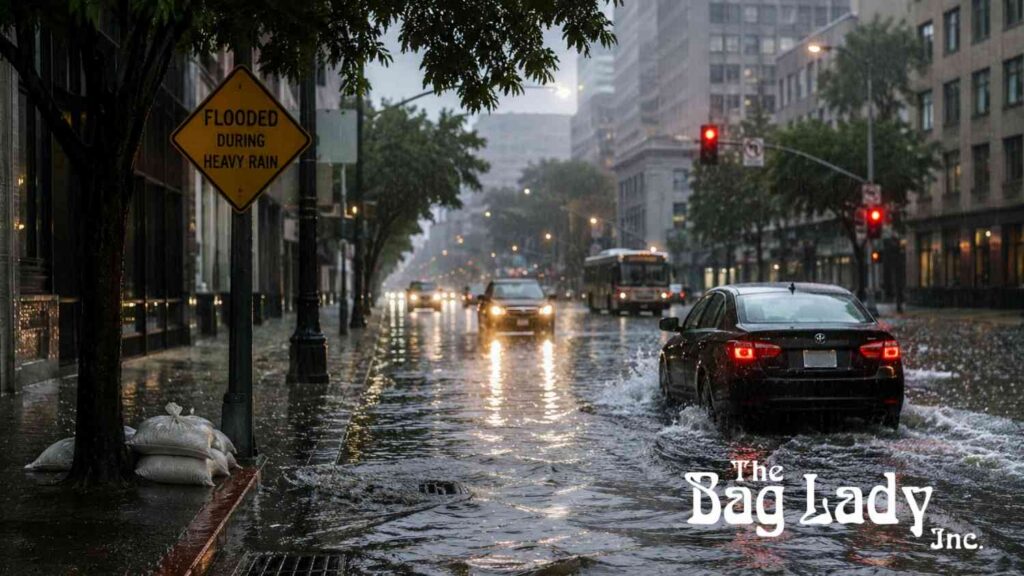
A flood readiness plan is more than having sandbags on hand. It should identify vulnerable areas, determine how much protection is needed, assign responsibilities, and make sure the equipment and materials are ready before heavy rain arrives.
Heavy rain can leave little time to organize a response. Flood protection is more effective when vulnerable areas, supplies, equipment, and responsibilities are identified beforehand. A clear plan helps property owners, contractors, municipalities, and emergency teams move from reacting to deploying.
A complete flood readiness plan should cover the property, flood-control supplies, people, equipment, deployment strategy, and response procedures. Planning these details before heavy rain starts gives teams more time to place barriers, protect vulnerable areas, and respond when conditions begin to change.
What Should Be Included in a Flood Readiness Plan?
Flood preparation works best when it starts before water reaches the property.
A useful plan should cover:
- Areas at risk: Identify entrances, garages, low points, drainage paths, and other locations where water could collect or enter.
- Water-flow routes: Determine where stormwater is likely to travel and where barriers may need to redirect it.
- Flood-control materials: Have sandbags, barriers, and other necessary supplies available before severe weather arrives.
- Deployment locations: Decide where supplies will be stored and where they need to be placed when flooding is expected.
- Personnel: Assign people to filling, moving, stacking, and monitoring flood-control barriers.
- Response timing: Establish when preparation should begin based on weather conditions and local flood risks.
- Post-storm inspection: Plan to check barriers, drainage paths, and affected areas after the storm.
The goal is to remove as many decisions as possible from the middle of an emergency.
Read More:Why Sandbags Fail During Floods And How To Prevent It
How Can You Identify Flood Risks Before Heavy Rain?
Start by walking the property before the next major storm.
Look for places where water could enter, collect, or move toward structures.
Check Low Points and Building Entrances
Garage doors, loading areas, doorways, and low sections of pavement can become entry points when runoff increases.
These areas may need temporary barriers before water reaches the property.
Identify Drainage Paths
Pay attention to where water naturally travels across the property.
A flood-control plan should account for drainage channels, slopes, nearby waterways, and areas where runoff could change direction during heavy rain.
Protect Vulnerable Areas First
Not every location needs the same level of protection.
Prioritize areas where flooding could cause the most disruption or property damage, then work outward from those locations.
Which Sandbags Should You Have Ready for Flood Protection?
Sandbags are a practical temporary option for controlling and redirecting floodwater. The right choice depends on how quickly you need to deploy them, how long they need to remain in place, and whether your team has the equipment and material needed to fill them.
The Bag Lady supplies empty and pre-filled sandbags in both polypropylene and burlap. The bags are available in different sizes and can be supplied in quantities ranging from smaller orders to hundreds or thousands of bags. The company can also provide filled bags at a specified location.
For flood control, polypropylene is often the preferred material because it is more resistant to rot and mildew than natural-fiber burlap. The Bag Lady’s polypropylene bags are 850 denier, include hem tops and tie strings, and have 1,600-hour UV protection for greater durability when exposed to outdoor conditions.
Pre-Filled Sandbags
Pre-filled sandbags are a practical choice when speed matters.
Having the bags filled ahead of time means your team can focus on moving and positioning them rather than organizing a filling operation when heavy rain is already approaching.
The Bag Lady can supply pre-filled sandbags in different sizes and materials and can provide them in large quantities. Filled bags can be palletized or supplied in bulk to make loading, unloading, and staging easier.
Pre-filled bags can be especially useful for:
- Emergency flood preparation: Get barriers ready without waiting for bags to be filled.
- Large properties: Stage bags at multiple vulnerable areas before rain begins.
- Government and emergency operations: Maintain a ready supply for rapid deployment.
- Construction sites: Protect entrances, equipment, materials, and other areas.
- Homeowners in flood-prone areas: Keep a supply ready for recurring seasonal risks.
Empty Sandbags
Empty sandbags can be a better fit for organizations that already have access to sand and want to manage their own filling operation.
They are easier to store before an emergency because empty polypropylene bags can be packed tightly and kept in a relatively small space. The Bag Lady supplies empty bags in different sizes and in both polypropylene and burlap.
Empty bags can work well when an organization:
- Maintains its own sand supply
- Has employees or crews available for filling
- Needs to store a large number of bags before storm season
- Wants to fill bags only when a flood threat develops
- Needs different bag sizes for different applications
Polypropylene vs. Burlap Sandbags
Material selection matters when bags will be exposed to moisture and outdoor conditions.
Polypropylene is a synthetic woven material that offers resistance to mold and rot and is suited to longer-term applications. The Bag Lady’s polypropylene bags include UV protection and reinforced construction.
Burlap is made from natural jute fibers. It is biodegradable and has good resistance to water seepage, making it useful for applications where a natural-fiber option is preferred. However, burlap is less resistant to mold and rot than polypropylene.
For flood-control applications where durability and resistance to outdoor exposure are priorities, polypropylene may be the more suitable choice.
How Many Sandbags Should You Prepare?
There is no single number that works for every property.
The amount you need depends on the areas requiring protection, the length and height of the planned barrier, expected water flow, and whether you need enough bags to reinforce or extend the barrier during the storm.
It is better to identify priority areas and estimate your requirements before heavy rain arrives rather than trying to determine quantities during an emergency.
For larger flood-control operations, The Bag Lady can supply hundreds or thousands of filled or empty sandbags and offers equipment for high-volume filling.
Also Read: What Type Of Sandbag Works Best For Flood Control?
How Should Sandbags Be Staged Before Heavy Rain?
Sandbags are most useful when they are ready to deploy before water starts moving toward the property. A good staging plan considers where the bags are stored, how they will reach vulnerable areas, and who will handle each part of the response. Preparing these details in advance can save valuable time when heavy rain begins.
Keep Supplies Accessible
Store sandbags, filling equipment, ties, and other supplies in a location that crews can reach quickly. Avoid placing them behind equipment, materials, or other obstacles that could slow down access. Everyone involved should know exactly where the supplies are stored before an emergency occurs.
Stage Supplies Near Priority Areas
Move supplies closer to entrances, low points, loading areas, and other locations identified as flood risks. Keeping sandbags near these areas reduces the distance crews need to carry them during deployment. For larger properties, consider staging supplies at several locations rather than keeping everything in one central area.
Assign Responsibilities in Advance
A flood response works more efficiently when everyone knows their role before the storm arrives. Assign people to fill bags, transport them, build barriers, and monitor areas where water may begin collecting. Clear responsibilities reduce confusion and help the team respond quickly as conditions change.
When Should You Start Flood Preparation Before a Storm?
Flood preparation should begin before heavy rain is an immediate threat. The exact timing depends on the forecast, flood risk, property, and amount of equipment required, but a staged timeline gives teams time to assess conditions, prepare supplies, and deploy protection.
5–7 Days Before the Forecasted Storm
Review the property and identify vulnerable entrances, low points, drainage paths, equipment areas, and other locations that may need protection. Check your existing sandbag supply and flood-control equipment, then identify any gaps that need to be addressed.
48–72 Hours Before Heavy Rain
Retrieve or order the supplies needed for the response. Confirm that sandbags, filling equipment, transportation resources, and other materials are available. Assign responsibilities so everyone knows who will fill, move, stack, and monitor the barriers.
24 Hours Before the Storm
Deploy barriers in priority areas and stage additional sandbags where crews can access them quickly. Check that filling equipment and other supplies are ready, and confirm team responsibilities before conditions make movement more difficult.
When the Storm Arrives
Monitor vulnerable areas and watch for changes in water flow. Reinforce or extend barriers where needed, keep communication between team members clear, and track areas where water begins collecting or entering the property.
After the Storm
Once conditions are safe, inspect barriers, drainage paths, and affected areas. Document damage or problem locations, assess which supplies were used or damaged, and replenish flood-control materials so they are ready for the next event.
For government operations and emergency teams, flood preparation may also need to align with existing emergency management plans, local response procedures, and available resources. The Bag Lady can supply bulk quantities of sandbags and flood-control equipment to support planned or urgent deployment needs.
Why Is Early Flood Preparation Better Than Emergency Response?
Flood control becomes harder once water is already moving through a property.
Workers may have less time to fill and position sandbags. Access routes can become difficult to use, and the areas that need protection may already be wet or flooded.
Preparing ahead allows organizations to:
- Have supplies ready before demand increases: Avoid delays caused by shortages, sourcing, or last-minute purchasing.
- Identify priority areas in advance: Determine which entrances, low points, drainage areas, equipment zones, or other vulnerable locations need protection first.
- Assign deployment responsibilities: Make sure people know where supplies are stored, who moves them, and who is responsible for placing barriers.
- Set response procedures: Establish when to deploy flood-control materials and how the team will respond as water levels or weather conditions change.
The Bag Lady has supplied sandbags and flood-control solutions for more than 30 years, serving homeowners, contractors, businesses, and government agencies.
Build Your Flood Readiness Plan Before the Next Storm
A flood plan is only useful when your supplies and response process are ready before the rain arrives. The right setup depends on the size of the property, expected water flow, number of areas requiring protection, and how many sandbags your team may need to deploy.
For larger operations, preparing hundreds or thousands of sandbags can quickly become difficult with manual filling. The Bag Lady’s Megga Bagger and bulk bag filling machine provide options for organizations that need to prepare large quantities of sandbags efficiently. For smaller teams, the Flood Fighter can make manual filling easier by holding the bag open during the filling process.
Choose Equipment Based on Your Flood Response Needs
High-volume operations may benefit from automated filling equipment that can prepare large quantities of bags before a storm. Smaller teams can use tools such as the Flood Fighter to organize a faster manual filling process.
Think about your expected bag volume, available personnel, storage space, and how quickly the bags need to be ready. Planning these details ahead of time helps ensure your flood-control supplies are prepared when conditions change.
Have Your Supplies Ready Before the Forecast Becomes an Emergency
Do not wait until water is already approaching to determine how your team will respond. Stage your sandbags, filling equipment, and other supplies where they can be accessed quickly.
Plan How Your Team Will Deploy the Bags
Decide in advance where sandbags will be placed and who will handle each stage of deployment. Assign team members to move, stack, reinforce, and monitor the barriers as conditions change. A clear deployment plan helps your team put flood protection in place quickly instead of figuring out the process during the storm.
The Bag Lady provides flood-control equipment for operations of different sizes. Prepare before the forecast becomes an emergency. Contact The Bag Lady to discuss the sandbag and flood-control solutions that fit your operation.
Frequently Asked Questions About Flood Readiness
When should I start preparing for heavy rain?
Start reviewing your flood plan several days before a forecasted storm when possible. Around 5–7 days out, assess vulnerable areas and available supplies. At 48–72 hours, confirm materials and responsibilities, then use the final 24 hours to stage and deploy priority barriers. Continue monitoring conditions during the storm and inspect and replenish supplies afterward.
How many sandbags should I keep on hand?
There is no single number that works for every property. The amount depends on the areas requiring protection, the size of the barriers, expected water flow, and how much of the property needs to be secured.
Are pre-filled sandbags better than empty sandbags?
Neither option is right for every situation. Pre-filled bags provide faster deployment, while empty bags can work well for organizations that have their own sand and filling operation.
Can sandbags stop all floodwater?
Sandbags are primarily used as a temporary barrier to help control, redirect, and reduce water flow. They should be part of a broader flood-readiness plan rather than treated as a guarantee against flooding.
How can I fill a large number of sandbags quickly?
High-volume operations can use automated sandbag filling equipment. The Bag Lady offers the Megga Bagger and other filling-machine options for organizations preparing large quantities of bags.
What is a Flood Fighter?
The Flood Fighter is a reusable tool that holds an empty sandbag upright and provides a wide opening for filling. It can make manual sandbag filling faster and easier, particularly when several people work together.
Can sandbags be used for purposes other than flooding?
Yes. The Bag Lady’s sandbags are used for applications including water-flow control, erosion control, stabilization, and other projects requiring filled bags.
What should I do after a flood?
Once conditions are safe, inspect the protected areas, check for displaced or damaged barriers, and assess whether additional water entered the property. Separate damaged or contaminated materials from supplies that remain usable, and follow applicable local requirements for disposal or handling of used sand and flood-control materials. Replenish your sandbags and other flood-control supplies so they are ready for the next event.
