
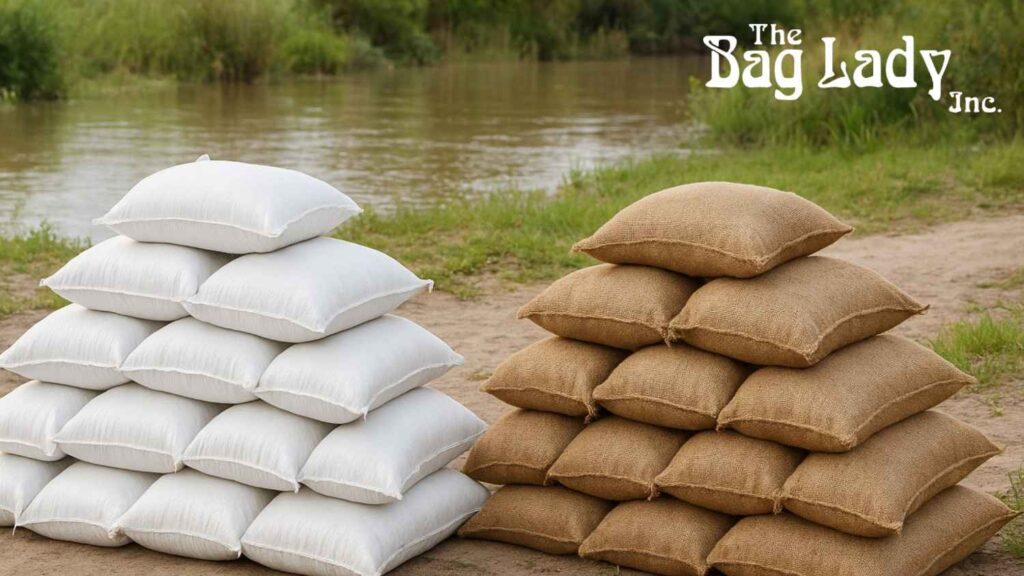
Worksites and outdoor areas often require a straightforward method for managing shifting ground and changing conditions. Sandbags provide essential support for countless projects that require added strength, stability, or temporary barriers.
But choosing the right material is not always easy, especially when polypropylene and burlap offer very different benefits. Knowing how each one works, how long it lasts, and what it’s best suited for helps you make a confident choice. This guide explains the differences clearly so you can select the right option for your project with less stress and better results.
What Are the Different Types of Sandbags?
Sandbags vary in form, size, and material, providing several options for reinforcing a site. There are paper bags, woven sacks, mesh bags, and cotton bags. Each one serves a different purpose, and a quick overview of these options will guide your understanding as you compare materials.
Sandbags come in different materials and constructions, each suited to specific purposes. The two most common types are Polypropylene and Burlap, with several variations within each.
- Polypropylene Sandbags
- Woven Polypropylene – Strong and durable, ideal for long-term projects or repeated use.
- Laminated Polypropylene – Water-resistant and reinforced for high-exposure conditions like flood control.
- Colored Polypropylene – Used for easy identification or specific site marking.
- Burlap Sandbags
- Standard Burlap – Biodegradable and suitable for short-term applications like landscaping or temporary flood barriers.
- Double-Layered Burlap – Offers extra strength while maintaining eco-friendly properties.
- Treated Burlap – Slightly more water-resistant for brief exposure to wet conditions.
This bullet structure highlights the main materials and their variations while avoiding repetition of durability and usage explanations already covered in the table.
Common Uses for Sandbags
Sandbags are versatile tools that provide support and stability across many applications. Choosing the right material depends on the environment, project length, and required durability. Both polypropylene and burlap sandbags can meet these needs, each with unique strengths.
- Flood Protection: Sandbags create barriers that block or redirect water, safeguarding homes, businesses, and public spaces during heavy rainfall or rising water levels. Proper stacking forms temporary levees that prevent or minimize water damage.
- Construction Projects: In construction, sandbags offer stability for temporary structures, equipment support, and help distribute weight evenly. They also function as ballast to secure materials or machinery against shifting during windy conditions or uneven terrain.
- Erosion Control: Sandbags act as barriers for effective erosion control, reducing soil movement on slopes, beaches, or riverbanks. They help protect landscapes from washouts, maintain embankments, and minimize sediment loss.
- Landscaping and Outdoor Work: Sandbags hold soil, mulch, or plants in place. They provide temporary support for garden beds, outdoor features, or other projects requiring controlled positioning of materials.
Read More: How To Fill 1000 Sandbags In One Hour: Emergency Flood Response
Pros and Cons of Polypropylene vs. Burlap Sandbags
Choosing between polypropylene and burlap comes down to how long the sandbags need to last, where they’ll be used, and the look or environmental considerations of your project. Both materials are effective.
They simply perform differently based on their natural properties. The table below summarizes the key advantages and limitations of each without repeating specifications from the comparison chart that follows.
Pros and Cons Table
| Feature | Polypropylene Sandbags | Burlap Sandbags |
| Primary Strengths | Durable, holds shape well, performs reliably in demanding conditions | Natural look, biodegradable, integrates well into outdoor environments |
| Ideal Use Duration | Longer-term placement | Short-term or temporary use |
| Water Interaction | Repels water and resists rot | Absorbs water and naturally settles |
| Aesthetic Fit | Industrial, structured appearance | Blends into soil, landscaping, and natural spaces |
| Common Applications | Flood barriers, construction, and erosion control | Landscaping, agriculture, and temporary protection |
What Is the Best Material to Use for Sandbags?
The best material depends on how long the sandbags will stay in place, the surrounding environment, and the visual or environmental goals of the project. Choose polypropylene for projects that require stability or repetitive handling. You can opt for burlap when you need something that blends easily into outdoor surroundings.
The table below provides a clear side-by-side comparison of polypropylene and burlap sandbags.
Polypropylene vs. Burlap Sandbags
| Feature | Polypropylene Sandbags | Burlap Sandbags |
| Water Behavior | Repels water | Absorbs water |
| UV Strength | Better with UV treatment | Weaker under prolonged sun |
| Lifespan | Months to years | Weeks to months |
| Environmental Impact | Not biodegradable | Biodegradable |
| Cost | Low and economical | Slightly higher due to the material |
Typical Lifespan of Each Sandbag Type
Polypropylene sandbags can last several months to a few years, depending on how much sun, water, and movement they experience. They hold their strength under harsh conditions, which is why they are often used for long-term work.
Burlap sandbags last weeks to a few months. They break down faster once wet or exposed to the sun, making them suitable for temporary projects or applications where natural decay is helpful.
What Is the Most Effective Way to Use Sandbags?
To get the best results, sandbags work most effectively when they are filled, placed, and stacked carefully. Here are some simple steps you can follow:
Step 1: Fill Sandbags Correctly
It’s best to fill each bag about two-thirds full. This gives the bag some flexibility, allowing it to mold into place and form a strong barrier.
Step 2: Position Bags Properly
Place the bags with the folded end facing upstream or toward the direction of the water or force you’re blocking. This helps the bags stay in place and reduces the chance of them being lifted or shifted.
Step 3: Stagger Rows
You can stack the bags in a staggered pattern, similar to bricklaying, so that the seams between rows overlap. This creates a tighter seal and helps the wall hold together more effectively.
Step 4: Press Bags Firmly
Gently press each bag into place to remove gaps. This ensures the sandbags form a solid, stable barrier without weak spots.
Step 5: Use a Plastic Sheet for Water Barriers
When building a barrier against water, placing a plastic sheet on the water side and weighting it down with sandbags can provide an extra layer of protection and a tighter seal.
Following these steps can make sandbag barriers more effective and stable, helping you manage water or support structures safely and efficiently. To make the job easier, sandbag fillers and tools are available that speed up filling and reduce strain, so you can get your barrier set up quickly and comfortably.
Also Read: Top 5 Reasons Contractors Are Switching To Automated Sandbag Fillers
Get Reliable Sandbags for Any Project
Finding the right sandbags for your needs is simple with The Bag Lady. We provide high-quality polypropylene and burlap sandbags in bulk, suitable for flood protection, construction, erosion control, and outdoor projects. Our inventory is ready-to-fill, and orders can be customized by quantity, size, or material to fit your requirements.
At The Bag Lady, we also offer Sandbag Filling Tools for your convenience, making the process fast and efficient:
- Bulk Bag Filler – Built tough and easy-to-use, this machine provides repeatable accuracy and reliable output for larger-scale projects. Our bulk bag filler ensures consistent bag weights and efficient processing, no matter the material.
- Megga Bagger Machine – Perfect for high-volume sandbag filling, this industrial automation device allows users to fill sand, gravel, or small rocks quickly and uniformly. Ergonomically designed, it minimizes labor and delivers a rapid, dependable solution for emergency flood control or large projects, producing each bag in 1 to 10 seconds.
Our team explains material strengths, ideal uses, and cost-effective options to help homeowners, contractors, and emergency teams make informed decisions. With fast delivery, consistent stock, and expert support, you can trust that your sandbag needs are fully covered. Contact The Bag Lady today to get the right bags and the support you need for any project.
