
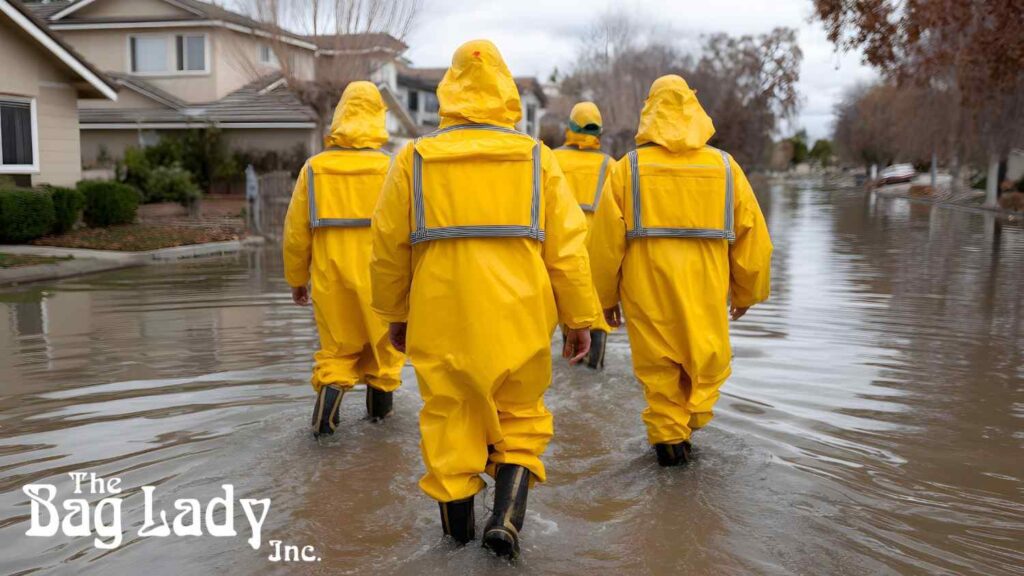
Flood response leaves no room for delay. When water levels rise quickly, manual sandbagging often cannot keep pace with the volume and speed required to protect streets, buildings, and critical infrastructure. Municipalities need a reliable way to produce large numbers of sandbags fast, and a bagging machine provides that capability when time matters most.
Essential Steps for Municipal Flood Preparedness with Automated Bagging Systems
Effective flood preparedness requires more than simply purchasing equipment. Municipalities must assess current capabilities, identify gaps, select appropriate technology, train personnel, and maintain readiness throughout the year. This systematic approach ensures that automated baggers deliver maximum value during actual emergencies rather than sitting idle or proving inadequate when needed most.
The following steps provide a framework for municipalities to develop or upgrade their flood response capabilities. Each component builds on the others to create a comprehensive preparedness strategy that withstands the pressure of real-world flood events.
Step 1: Evaluate Current Sandbagging Capacity and Response Times
Municipalities should start with a clear review of their current sandbagging capacity and response times. This includes how many sandbags existing methods can produce per hour, how many workers are required, and how quickly bags can be ready during different flood scenarios. Most cities find that manual sandbagging cannot keep up with the demand created by serious flooding.
When evaluating needs, consider these factors:
- Determine the required output speed and total volume based on potential disaster scenarios or daily operational needs.
- Identify the type of materials to be bagged (sand, road salt, or other recyclables) to ensure compatibility with the machine’s feeding and sealing mechanisms.
- Assess available space for the equipment, material storage, and post-bagging logistics, such as stacking pallets or transporting filled bags.
This assessment, combined with realistic flood timelines, reveals gaps between current capabilities and what is actually required for effective emergency response.
Step 2: Determine Automated Bagger Specifications Based on Population and Risk
Automated bagger systems vary significantly in production capacity, ranging from machines that produce 200 bags per hour to industrial units capable of 800+ bags hourly. Municipal population, geographic flood risk, and critical infrastructure determine which capacity level makes sense. A small town with minimal flood exposure has different requirements than a riverside city with extensive vulnerable areas.
When planning for flood response, you should always prepare for the most demanding scenario your municipality could realistically face. Historical flood data, FEMA flood maps, and climate projections help you understand the potential scale of these events. From there, identify critical facilities that must remain protected, including water treatment plants, emergency services buildings, hospitals, and major transportation routes. The automated bagger you select should be capable of supporting this highest-risk scenario without requiring multiple days of continuous operation.
Step 3: Develop Staff Training Programs for Equipment Operation
Automated baggers need operators who understand setup, calibration, material loading, and basic troubleshooting. Cross-training multiple staff members ensures coverage during emergencies and helps maintain skills over time. The Bag Lady’s automated bagging machines are intuitive, so staff can operate them safely and effectively with minimal instruction.
Step 4: Integrate Automated Baggers into Emergency Operations Plans
Automated baggers need to fit smoothly into your overall emergency response strategy. Clear protocols and prepared staging areas help ensure the machines can be deployed quickly and effectively when flooding occurs.
- Activation Protocols: Define when equipment is deployed, who authorizes use, and how operations coordinate with other flood response activities.
- Staging Locations: Ensure access to sand, electricity or generators, and transportation for distributing filled sandbags.
- Prepositioned Materials: Keep supplies ready at primary and backup locations to minimize setup time.
- Distribution Protocols: Establish clear methods to get filled sandbags to priority areas efficiently.
Step 5: Maintain Year-Round Equipment Readiness and Testing Schedules
Automated baggers must be ready to perform at a moment’s notice. Regular testing ensures the equipment works properly, identifies maintenance needs, and keeps operators confident in using the system.
- Quarterly Testing: Run tests every three months to catch issues early and refresh operator skills.
- Simulate Emergencies: Set up equipment at staging locations and run full production cycles.
- Check Systems: Verify all sensors, controls, and mechanical components function correctly.
- Document Results: Maintain detailed logs of tests, repairs, and parts replacements for maintenance planning and warranty or insurance purposes.
Read More: Top 5 Reasons Contractors Are Switching To Automated Sandbag Fillers
Strategic Advantages of Automated Baggers for Municipal Flood Planning
Automated baggers serve as a long-term planning and risk-management asset for municipalities. Beyond filling sandbags, they provide predictability, support budgeting, and enhance readiness for flood events. By incorporating automated systems into emergency plans, municipalities can reduce uncertainty and improve overall flood response effectiveness.
Predictable Output for Emergency Planning Models
Automated baggers deliver consistent, measurable production rates, allowing municipalities to plan flood response using fixed output rather than estimates. This makes it easier to calculate required sand volumes, anticipate barrier coverage, and establish reliable response timelines during emergencies.
Reduced Dependence on Volunteer Mobilization
With automated systems, municipalities rely less on large groups of volunteers, who may be unavailable or delayed during rapid-onset floods. This ensures a steady, reliable production capability, reinforcing operational consistency without repeating staffing efficiency points.
Lower Long-Term Risk and Liability Exposure
Automated baggers help minimize potential injuries and reduce workers’ compensation claims by limiting physical hazards associated with manual sandbagging. Incorporating them into municipal flood plans supports safer operations and lowers liability exposure, contributing to compliance and risk management goals.
Improved Budget Forecasting and Capital Planning
By converting flood response into a predictable, planned investment, automated baggers make budgeting and capital planning more accurate. Maintenance schedules, lifecycle costs, and reduced emergency overtime are easier to forecast, turning an unpredictable expense into a manageable long-term strategy.
Also Read: How To Estimate Sand Volume & Bag Count For Flood Control Projects
The Bag Lady’s Proven Automated Bagger Systems for Municipalities
The Bag Lady offers automated bagging solutions specifically designed for municipal emergency response requirements. The Megga Bagger stands out as a reliable sandbag filler for municipalities that need speed and consistency during flood response. Designed for high-volume output, this industrial system allows crews to fill large sandbags quickly and evenly using sand, gravel, or small aggregate. Its automated process reduces manual labor while helping teams produce protective barriers faster when time matters most.
The Megga Bagger is engineered with practicality in mind. Its ergonomic design supports steady operation with minimal strain on operators, while durable construction allows it to perform in harsh weather and outdoor environments. Simple controls make it easy to use with limited training, which is critical during emergency deployment. For cities and towns preparing for flood control, this automated bagging machine delivers dependable performance without unnecessary complexity.
Partnership begins with a needs assessment that examines specific flood risks, critical infrastructure protection requirements, and operational constraints. Contact The Bag Lady today to discuss municipal flood response needs and explore how automated bagging systems can transform emergency preparedness capabilities.
